Take a Minute To Think About Your Coffee
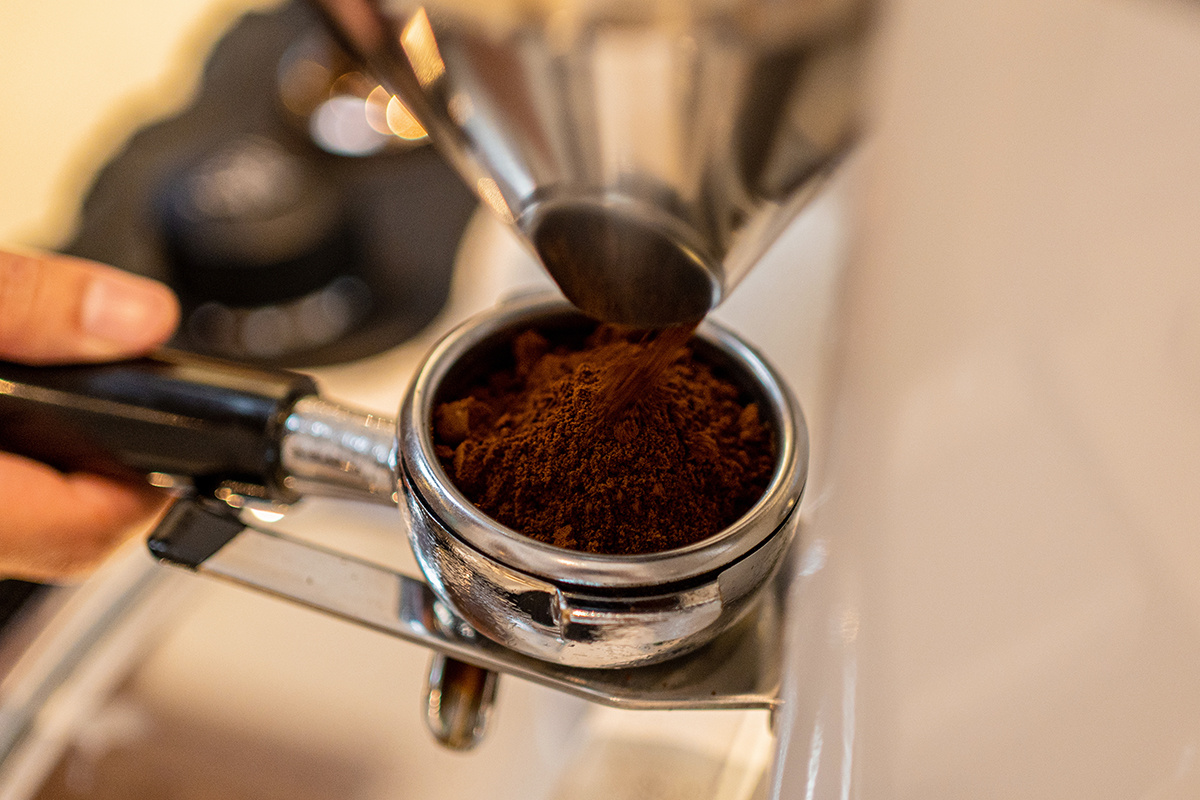
When you take a minute to think about your coffee, you're not just considering taste—you're making a decision that impacts your business's...
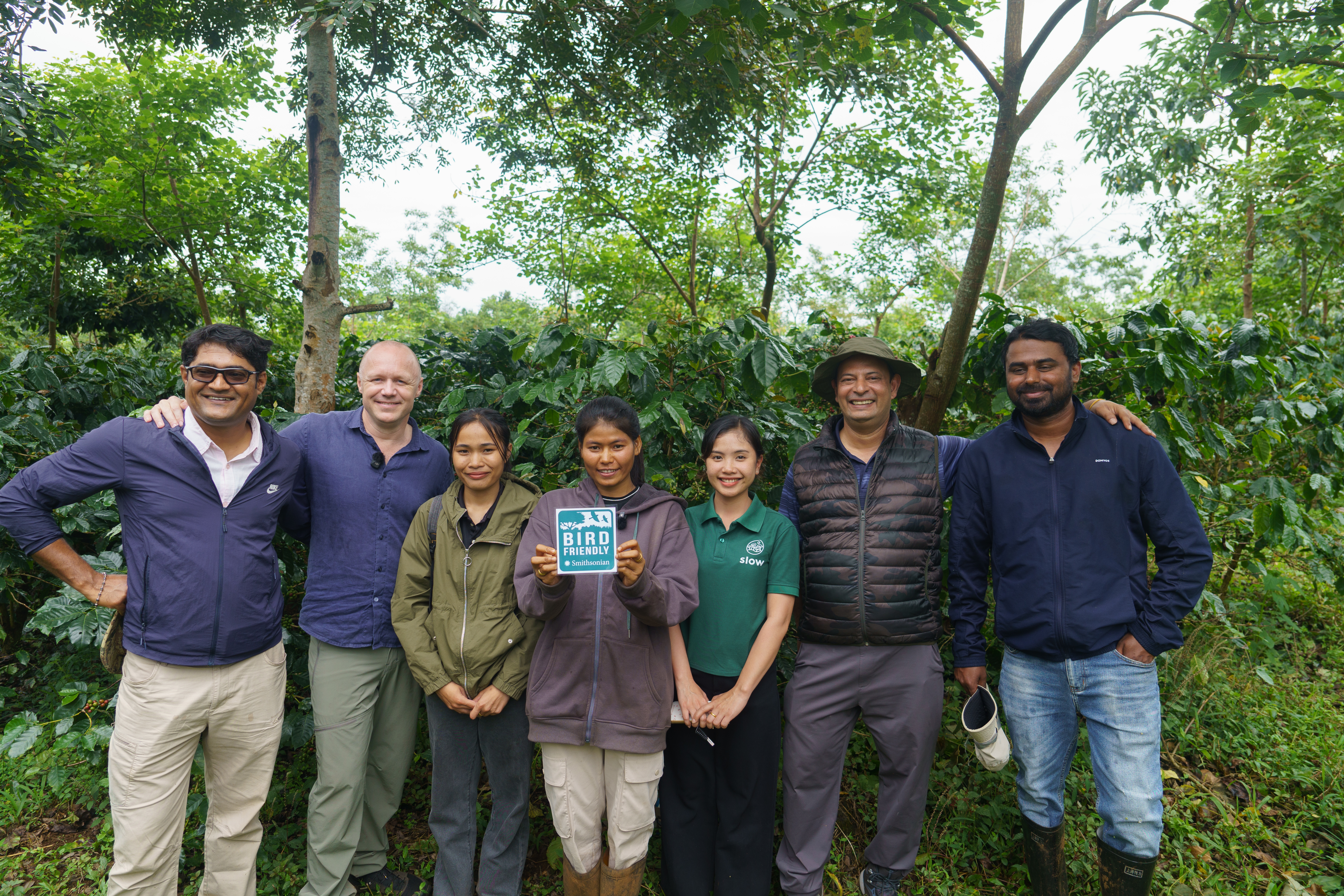
Slow team on site, from leadership to farm management. Photo: Saosavanh Ketmala.
Agricultural intensification is the primary driver of habitat loss across Southeast Asia, and habitat loss sits at the root of bird population decline worldwide. Across much of the region, what has been systematically removed from the land is the canopy, cleared at scale in the name of yield.
Trees disappear, vertical structure collapses, and landscapes that once supported complex ecological communities erodes.
Birds and wildlife lose what they depend on: continuous cover, reliable food sources, and the ability to move safely through the landscape.
Even organic farming systems, valuable as they are in reducing chemical harm to consumers, farmers, and biodiversity, cannot compensate for the absence of canopy above the crop that is needed for it to function as a habitat.
"When that vertical structure is lost, habitat does not gradually decline. It collapses."
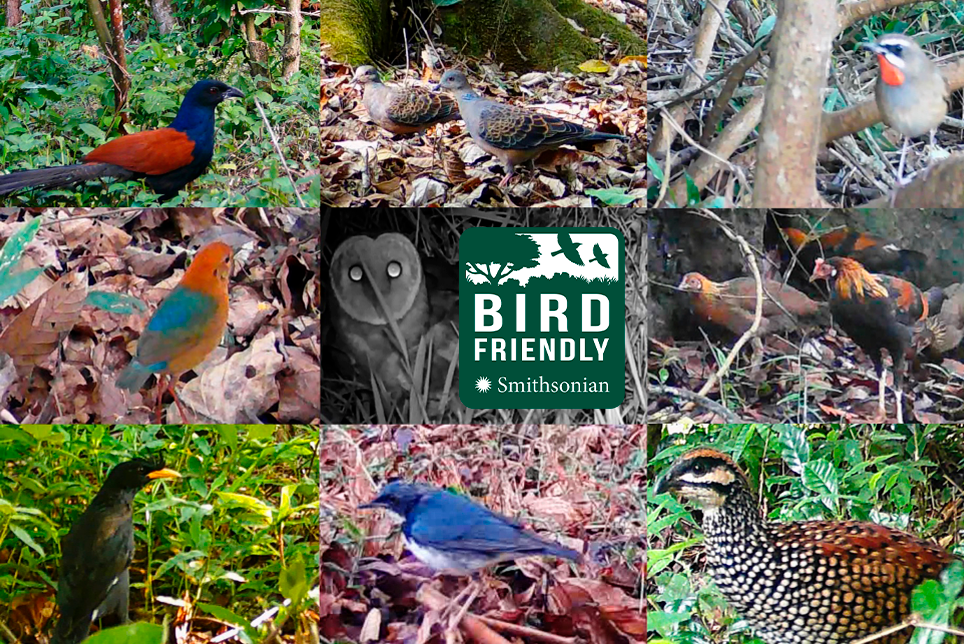
Birds seen in forest-grown coffee systems and buffer zones at Slow. Photo: Saosavanh Ketmala.
On the Bolaven Plateau in southern Laos, Slow has spent years building a farming model designed around canopy and ecological function. At Nampot and Lakkhao, coffee is grown under trees, not instead of them.
Production is organised around canopy: layered shade, multiple tree species, and continuous cover extending well above the coffee plants. This is not incidental shade. It is a system deliberately structured, over years, to create the conditions required for a landscape to function as habitat.
Rather than simplifying the land to fit the crop, the crop is integrated into the land as it stands: diverse, canopied, and ecologically functional in ways a cleared field cannot match.
Bird Friendly® is a research-based shade certification developed by the Smithsonian National Zoo and Conservation Biology Institute. It is widely regarded as the most rigorous certification for biodiversity in coffee, requiring that all certified coffee is grown on farms that meet strict habitat criteria.
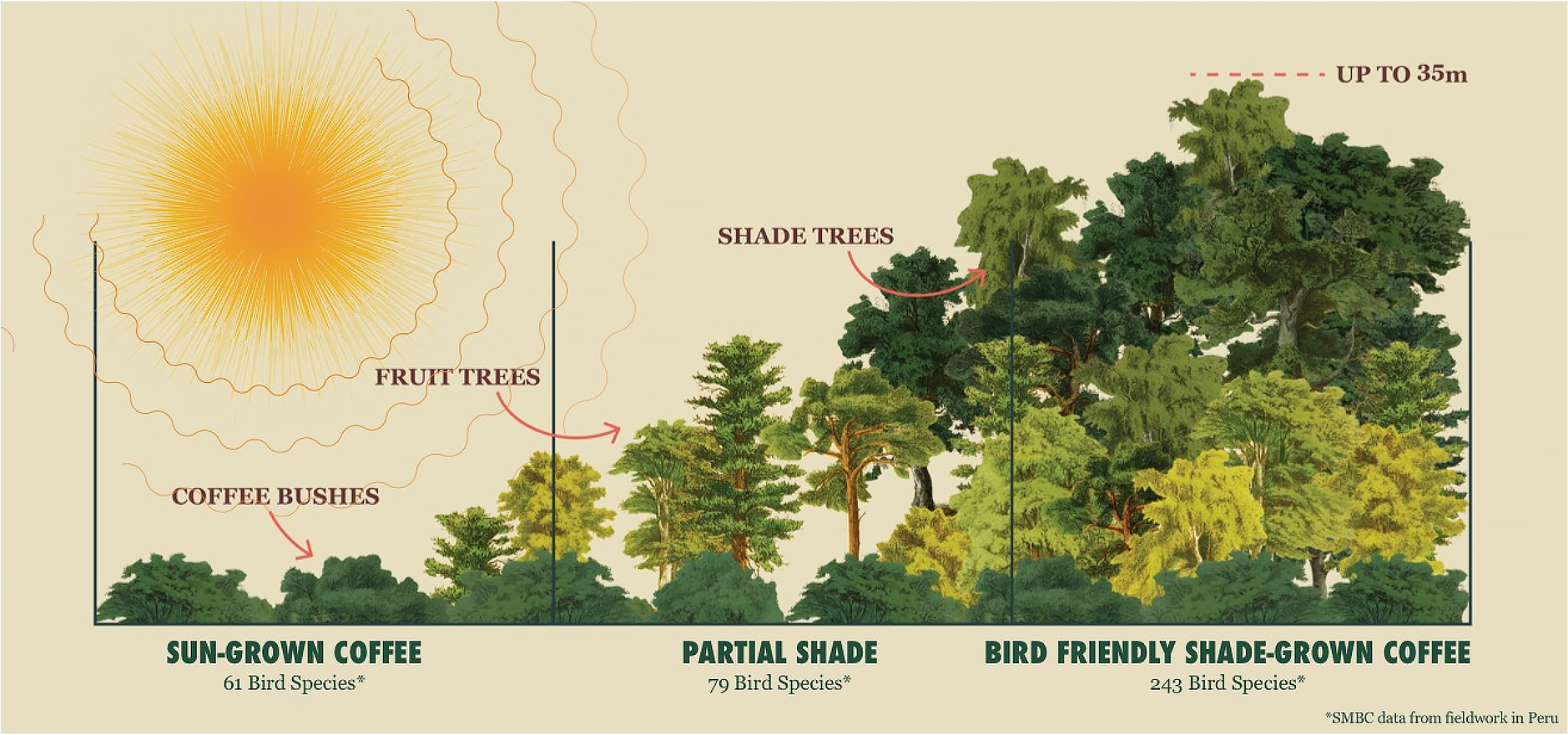
Image courtesy of Smithsonian National Zoo and Conservation Biology Institute. Used with permission.
This is not a marketing claim. It is a structural assessment conducted by third-party auditors trained in the standard, who evaluate each farm against a precise set of ecological requirements. The question is empirical: does this landscape already function as habitat? Not whether it intends to, or is working toward it, but whether it does.
Because Bird Friendly® also requires full organic certification as a non-negotiable prerequisite, the standard addresses both what is present on the land and what is absent from it. Pesticides reduce the insect populations birds depend on. Organic certification ensures they are not used.
Together, these requirements are why Bird Friendly® is often described as the gold standard for biodiversity conservation in coffee landscapes.
Most commercial coffee systems are engineered for efficiency: simplified planting layouts, reduced shade to accelerate cherry development, and management practices oriented toward short-term yield.
Across the Bolaven Plateau, and much of Southeast Asia, adoption of complex agroforestry systems remains limited. The reason is economic. Trees take years to establish. Canopy takes time to close. Multi-layered systems only become fully functional over long ecological timescales. This runs counter to the short-term economics of conventional production.
Bird Friendly® requires exactly that long-term investment, and requires it to be fully in place before certification is granted. This is not a standard met through incremental adjustments or documentation. It must be built, structurally, over time.
That is why fully certified, habitat-functioning systems of this kind remain exceptionally rare in Southeast Asia.
The certified areas at Nampot and Lakkhao were not pristine, untouched forest. They were previously altered landscapes shaped by agricultural use. What changed was the approach.
Through sustained agroforestry investment and active forest protection, ecological structure was rebuilt: shade returned over time, trees grew taller, and distinct vegetation layers formed above and around the coffee. Landscapes simplified for production gradually regained depth and complexity, not as a side effect, but as the result of deliberate, long-term work by Slow's operations, cultivation, agroforestry, and impact teams.
Bird Friendly® certification is the independent, criteria-based recognition that these systems now meet defined habitat requirements on the ground.
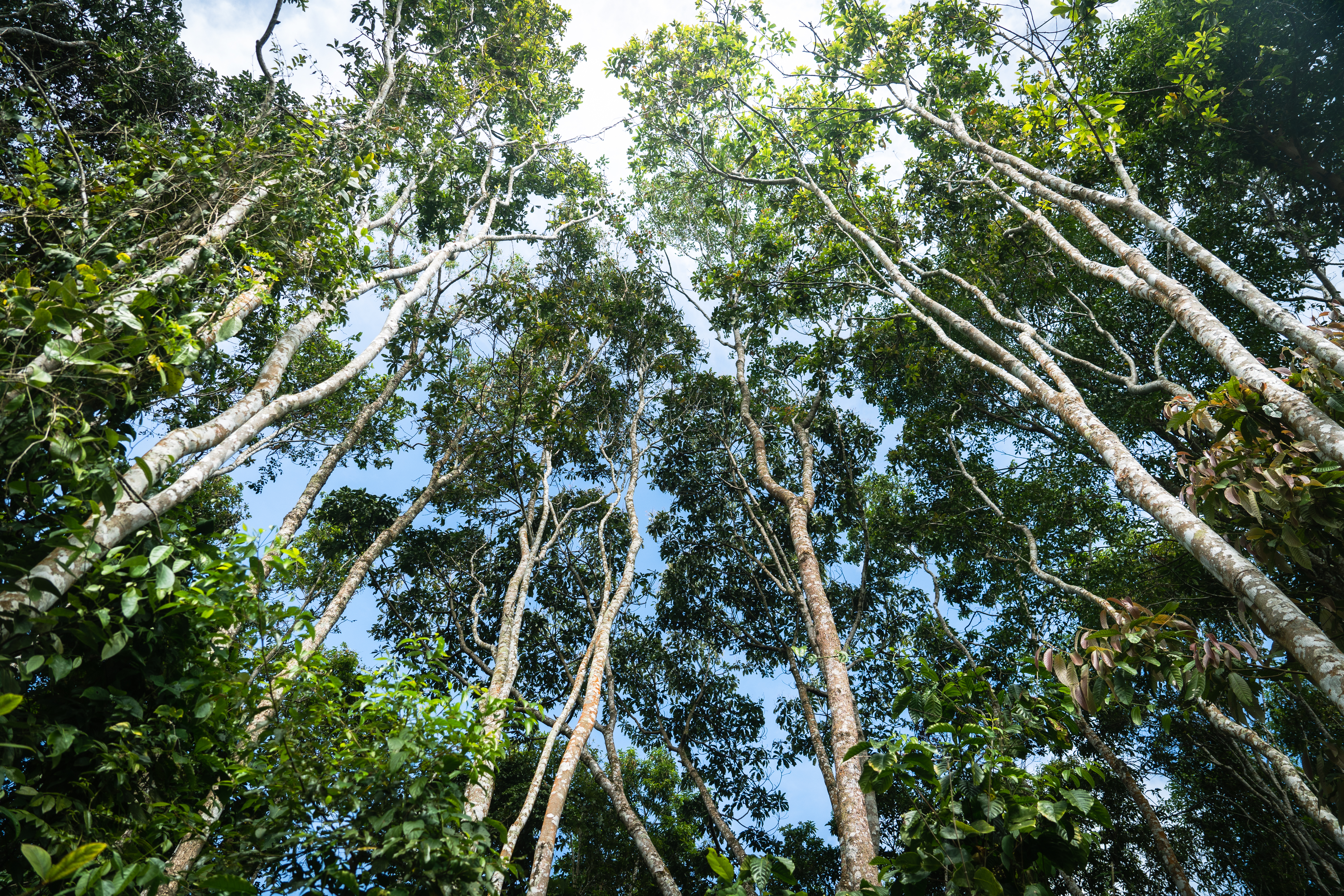
Forest-grown coffee systems and buffer zones at Slow. Photo: Saosvana Ketmala.
Birds are now observed moving through both the coffee blocks and adjacent forest areas at Nampot and Lakkhao, rather than being confined to isolated tree clusters or forest edges. This indicates a level of habitat connectivity across the system.
Such movement depends on specific structural conditions: continuous canopy cover, distributed food availability, and a stable microclimate that supports consistent habitat use. These are not features that can be improvised, but the result of long-term system design.
These outcomes are consistent with what Bird Friendly® certification is designed to assess, and with research associated with certified agroforestry systems, including increased biodiversity and improved habitat conditions for both migratory and resident bird populations.
"Workers across both farms report noticeably cooler mornings and improved soil moisture retention following rainfall, early field observations that reflect changes in canopy cover and ecological function beyond the coffee crop itself."
Most sustainability certifications focus on practices: what a producer does, how inputs are managed, and what commitments are documented and renewed over time. Bird Friendly® focuses on structure. It does not ask whether a producer intends to support biodiversity. It asks a different question: does this landscape already function as habitat?
The distinction matters because intention and ecological function are not the same.
"Bird Friendly® shifts the focus from commitments to measurable habitat conditions on the ground."
Coffee does not have to displace ecosystems. Under the right structural conditions, canopy architecture, species diversity, and long-term management, it can exist within them, not as an extractive layer imposed on a landscape, but as one functioning element within a broader ecological system.
Bird Friendly® certification is designed to assess and verify these conditions on the ground, requiring that they are demonstrated rather than declared. That is what Nampot and Lakkhao are showing at scale, in a region where such fully developed systems remain rare.
When you take a minute to think about your coffee, you're not just considering taste—you're making a decision that impacts your business's...
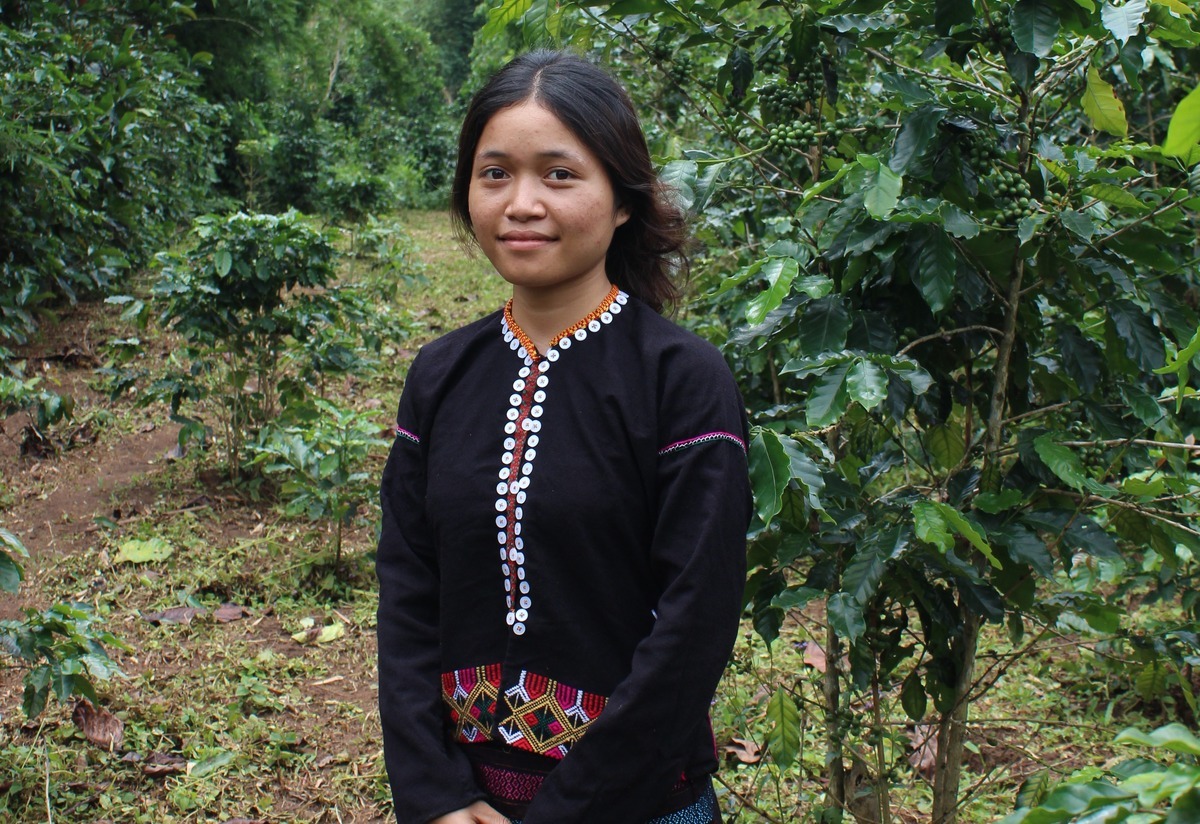
Climate pressures are rising. In one Vietnamese coffee region, farmers are turning to agroforestry to secure yields, restore soils, and keep supply...